The best places to find content writing jobs in 2026 are niche job boards such as ProBlogger Jobs, freelance marketplaces such as Upwork, Fiverr, PeoplePerHour and Guru, and LinkedIn. Marketplaces are easiest for beginners, but they take a cut of every job, so most writers move toward direct clients once they have samples and reviews.
Last updated: October 2026 · How we researched this: we compared current freelancer fees on each platform’s pricing and help pages and in 2026 fee guides, checked which job boards are still active, and read recent writer advice on rates and AI’s effect on the market.
Key takeaways
- Fees vary a lot: Fiverr keeps 20%, Upwork charges a variable 0–15%, PeoplePerHour charges 20% on the first £250 with each client, and Guru charges 5–9%.
- Job boards like ProBlogger Jobs are free for writers and often pay better than marketplaces.
- AI writing tools have cut demand for cheap, generic articles. Specialist and expert-led content is where the money is.
- A common starting rate for direct clients is around $0.10–0.15 per word. Below $0.05 per word is very hard to live on.
- Two sites from older lists are gone or unclear: Outsourcely and FreeeUp. We removed them from the list.

Content writing jobs: platforms compared
| Site | Type | What it costs writers | Best for |
|---|---|---|---|
| Upwork | Marketplace | Variable service fee, 0–15% per contract, plus Connects to apply ($0.15 each) | Ongoing clients and long projects |
| Fiverr | Marketplace (you sell “gigs”) | 20% of each order | Beginners who want buyers to come to them |
| PeoplePerHour | Marketplace | 20% up to £250 per client, then 7.5%, then 3.5% above £5,000 | UK and European clients |
| Guru | Marketplace | 9% on the free plan, down to 5% on paid plans | Writers who want lower fees |
| ProBlogger Jobs | Job board | Free for writers | Blog and content marketing roles |
| Textbroker | Content mill | Fixed per-word rates by star rating | Steady low-paid practice work |
| Freelancer.com | Marketplace | Project fee on each job | Bidding on many small projects |
| Network and job board | Free (Premium optional) | Contract and in-house content roles | |
| Mediavine and Copyblogger job boards | Job boards | Free for writers | Niche blog writing and copywriting |
| Private communities | Paid groups | Membership fee | Experienced writers seeking warm leads |
Fees were checked in October 2026 and change often. Read each site’s current pricing page before you sign up.
1. Upwork
Upwork is the largest general freelance marketplace. Since 2025 it has used a variable service fee from 0% to 15%, shown before you send each proposal, instead of the old fixed 20/10/5% tiers.
You also pay for Connects to apply to jobs. Look for clients with a verified payment method and use Upwork’s contracts so you are covered if there is a dispute.
2. Fiverr
On Fiverr you create a service listing (a “gig”) and buyers come to you. Fiverr keeps 20% of each order, so a $100 order pays you $80.
The old “everything for $5” image is outdated. Many writers now sell packages such as “1,000-word SEO blog post” at much higher prices once they have reviews.
3. PeoplePerHour
PeoplePerHour is popular with UK and European clients. Older articles said it was “0% commission for life”, but that is not true today.
Freelancers pay 20% on the first £250 billed with each client, 7.5% up to £5,000, and 3.5% after that (plus VAT for UK and EU freelancers).
4. Guru
Guru charges a job fee of 9% on the free Basic plan. Paid memberships lower this to as little as 5%.
Check each client’s history before you accept. New accounts with no payments and vague briefs are a warning sign.
5. ProBlogger Jobs
ProBlogger’s job board is one of the oldest writing job boards and is still active. It is free for writers, because employers pay to post.
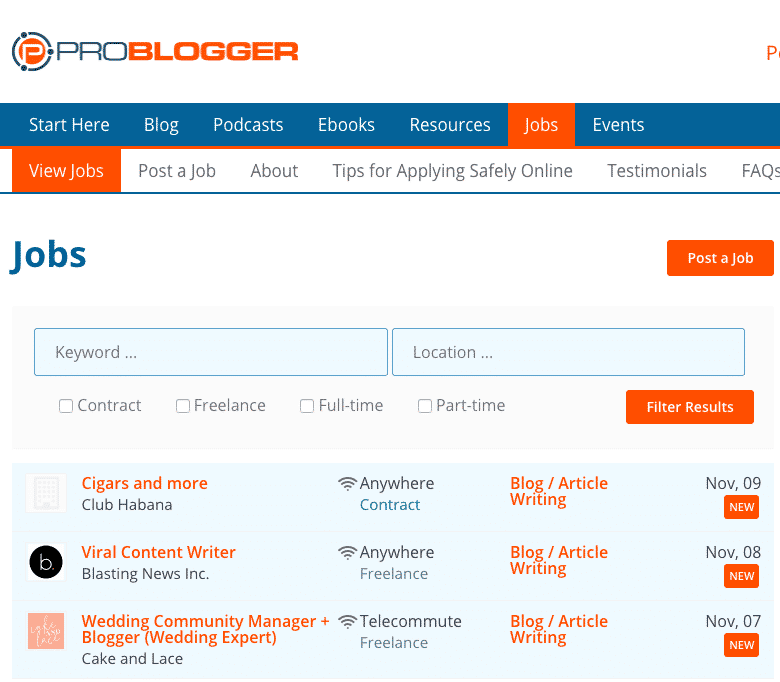
Set up email alerts with keywords for your niche, and apply the same day, because good listings get many applications. Browse it at ProBlogger Jobs.
6. Textbroker
Textbroker is a content mill. You submit a writing sample, get a star rating, and pick orders that match your level.
The upside is steady work and fast payouts. The downside is low per-word pay, so treat it as practice and a gap-filler, not your main income.
7. Freelancer.com
Freelancer.com covers every type of work, including writing. You bid on projects, and the platform takes a fee on each awarded project.
Competition on price is strong here. Win jobs with a short, specific proposal and a relevant sample, not with the lowest bid.
8. LinkedIn
LinkedIn is underrated by new writers. Use job filters for Contract and Part-time roles, and post useful content about your niche so clients find you.
Many mid-size companies hire writers here without using a marketplace, which means no platform fee.
9. Niche job boards
The Mediavine and Copyblogger job boards list blog and copywriting roles. They suit writers in finance, health, parenting and marketing.
10. Paid writer communities
Communities such as Freelance Writers Den or Content + Community share vetted leads. They cost money, so join only when you write regularly and can use the leads.
Sites removed from older lists
- Outsourcely: we could not confirm it still operates, so we removed it.
- FreeeUp (FreeUp): sold to The HOTH in 2019. We could not confirm how it works for new writers in 2026, so check it directly before applying.
How to win your first content writing job: a pitch checklist
- Pick one niche you know, such as software, personal finance or travel.
- Write three samples in that niche and publish them on a simple portfolio page or Google Docs.
- Open with the client’s goal, not your life story. One line on what you will deliver.
- Link one sample that matches the job closely.
- Name your rate and timeline clearly.
- Follow up once after three to five days.
If you want ideas beyond client work, such as blogging or ebooks, see our guide to make money writing online.
Red flags in writing job ads
- Unpaid “test articles” longer than a few hundred words.
- Requests to move payment off the platform before any work is done.
- “Pay to apply” or “pay for training” offers. The FTC lists upfront fees as a classic job scam sign.
- Rates like $5 for 1,000 words. That is not a real starting point.
Related guides
- Best money making sites: Upwork, Fiverr fees and payouts compared
- Top online earning sites for freelancers
- How to work online from home and get paid
FAQ
How do I get content writing jobs with no experience?
Write three sample articles in one niche and publish them. Then apply on Fiverr, Upwork or ProBlogger Jobs with short, specific pitches that link to the most relevant sample.
How much do content writers earn per word?
Beginners on marketplaces often earn a few cents per word. Direct clients commonly pay around $0.10–0.15 per word to start, and specialists in finance, legal or tech can earn much more.
Which site is best for content writing jobs?
For beginners, Upwork and Fiverr have the most buyers. For better-paid work, use job boards such as ProBlogger Jobs and LinkedIn, which do not take a cut of your pay.
Has AI killed content writing jobs?
AI has reduced demand for cheap, generic articles. Clients still pay for writers with real expertise, original research, interviews and good editing, often including editing AI drafts.
Is Fiverr or Upwork better for writers?
Fiverr suits writers who want buyers to come to them, but it keeps 20% of each order. Upwork suits writers who want to pitch for ongoing projects and has a variable fee of 0–15%.
Conclusion
Content writing jobs are still out there in 2026, but the easy, low-skill articles are disappearing. Start on one or two marketplaces to get reviews, use free job boards for better-paid roles, and pick a niche so you can raise your rates.
If you can also write in a second language, translation is another option. Read our guide on how to work as a freelance translator.